
Multi-chain Assets
A multi-chain wallet provides one place to view several networks, but each network keeps its own ledger, fees and confirmation rules. Always identify where the asset actually exists before moving it.
A multi-chain wallet, blockchain network and Web3 knowledge hub from imtoken
Manage assets across networks, review transfers and transaction records, connect to DApps, understand approvals and build safer wallet habits. imtoken organizes wallet use and blockchain knowledge around practical checks: confirm the network, destination, amount and request details before every on-chain action.
Create a new wallet on a trusted device and make offline backup part of the initial setup.
View the steps →Record the seed phrase offline and avoid screenshots, cloud storage and chat tools.
Learn the principles →Confirm both the receiving address and the network so the transfer matches the intended chain.
Review the checks →Check the destination, network, amount, token and gas before signing, then keep the transaction hash.
Open the checklist →Verify the domain and account request first, then review each signature and token approval separately.
Connect more safely →A multi-chain wallet provides one place to view several networks, but each network keeps its own ledger, fees and confirmation rules. Always identify where the asset actually exists before moving it.
Match the address and network when receiving. Before sending, check the amount, gas and final signing details. On-chain transactions are generally not reversible by the wallet alone.
Learn the transfer flow →Use the mobile wallet to manage networks, assets and transaction history. Sensitive recovery information should remain offline and should never be entered into third-party websites.
Browser connections can support DApp access and approval requests. Connecting an account does not mean every later signature should be accepted.
Understand web usage boundaries →Seed phrases and private keys are self-custodied. imtoken staff will never ask for them or for a verification code.
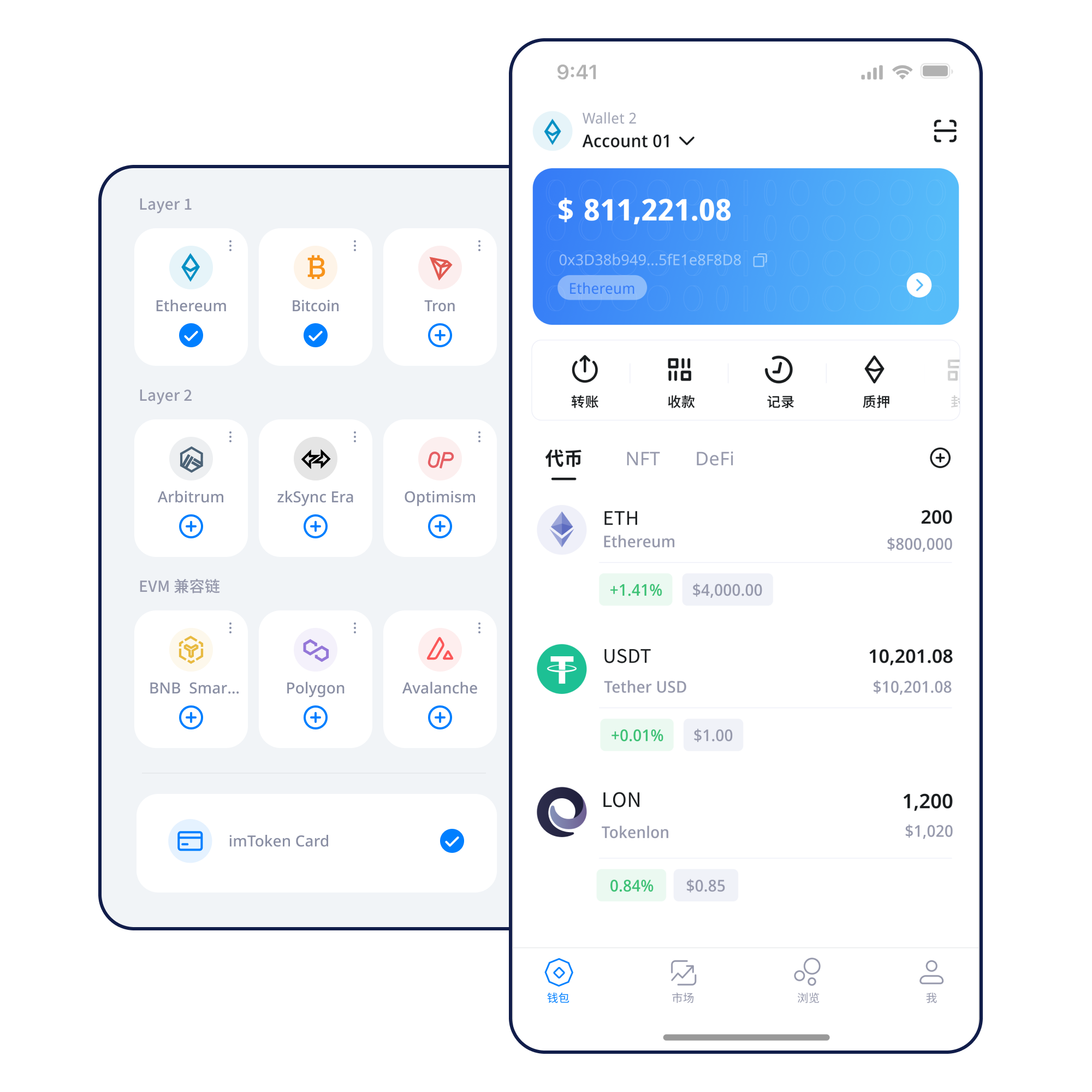
A wallet can present several networks through one interface, while each chain still maintains separate balances, fees and confirmation rules.
Nodes maintain the ledger, transactions are included in blocks, and users can inspect public results through a block explorer.
Similar address formats do not make assets interchangeable across networks. Gas, token contracts and balances must be checked on the selected chain.
Moving assets between a Layer 2 and its mainnet can involve bridges, contract interactions and waiting periods.
Fees vary with network conditions and transaction complexity. After submission, the transaction hash is the best starting point for checking on-chain status.
Use the clear on-site download entry rather than unknown popups, QR codes or third-party links.
Handle recovery information only in a trusted wallet environment and never send a seed phrase to support staff.
Keep the seed phrase offline, do not screenshot it and verify the recorded order carefully.
Confirm where the asset exists and whether the destination supports the same network.
Review the address, network, amount and gas. A small test can be useful for an unfamiliar route.
Use transaction hashes to verify results, inspect DApp requests and remove approvals you no longer need.
A DApp session can include several different requests. Domain verification, account connection, message signing, transaction signing and token approvals should not be treated as one blanket consent.
Wallet control follows the keys, which is why seed phrases and private keys must remain under the user's control. imtoken staff will never ask for a seed phrase, private key or verification code. Before transfers, signatures and approvals, verify the network, destination, amount, contract and permission scope. Third-party DApps and smart contracts can introduce independent technical and operational risk. Public computers, remote-control sessions, unknown extensions and suspicious links can also increase exposure. Security is not an absolute guarantee; it is a set of checks performed before each action.
Open the Security CenterAn address is a public on-chain identifier, while a seed phrase and private keys control wallet access. The selected network determines where assets actually exist. Gas pays for network execution, and a transaction hash helps locate public transaction data. Once you enter Web3, it is also important to distinguish account connections, message signatures, transaction signatures and token approvals.
Start with the beginner path →Understand blocks, confirmations and block explorers.
Learn how addresses, gas, contracts and tokens relate.
Understand mainnet relationships, bridges and settlement paths.
Review approval targets, allowances and revocation.
Build habits around backups, devices and transaction checks.
Look up common wallet and network concepts.
Ethereum PoS uses validators to participate in consensus. Reward conditions can change with protocol and network state, while entry, exit and withdrawal processes may involve waiting periods.
Learn how staking works →Staking does not guarantee returns. Validator penalties, smart-contract risk, third-party service risk, waiting periods and digital-asset price volatility may all affect outcomes.
Understand validator risk →Clearer paths connect multi-chain assets, transaction records and network checks.
An account connection is not permission for every later request.
Similar address formats do not mean assets can move directly between networks.
Download actions are routed through the site's download page rather than unknown third-party links.
A seed phrase can derive or restore wallet keys, while a private key directly controls a specific account. Both are highly sensitive and should never be sent to anyone.
Assets can exist on different networks, and similar address formats do not make those networks interchangeable.
Gas measures network resources used by a transaction or contract operation, and the final fee depends on network conditions and rules.
It is an identifier that can be used in a block explorer to locate a transaction and inspect its public status.
A connection usually establishes account interaction. Later signatures, transactions and approvals still require separate review.
It gives a smart contract permission to use a token within a specified scope or allowance.
All download actions use the on-site download page and never trigger automatically.